Shaerine
ROOTED
IN WELLNESS

Nourishment for Life
*HIGHLIGHTS*
YOUTH SCHOOL FIELD TRIPS


Others told me:
“It is all in your head. There is nothing wrong with you. Your tests are negative. You are fine. Go seek counseling.”
I cannot say with certainty that every symptom I experienced was caused by the cancer. What I can say is that I knew something did not feel right—and I did not feel heard.
After being told repeatedly that I was fine, I began to question myself. Maybe they were right. Maybe I did need therapy. So, I found a therapist and committed to counseling for nearly a year.
But physically, nothing changed.
I still felt exactly the same.
Then I found a lump in my breast.
It was December 16, 2020, in the middle of the COVID-19 pandemic. I remember thinking, You have got to be kidding me. Merry frickin’ Christmas and Happy New Year.
After four years of being told that nothing was wrong, I was absolutely terrified. Pandemic-related delays meant it took nearly three months for me to be seen. During that time, the lump grew from approximately the size of a small marble to the size of a golf ball!
Within minutes of finally being examined, I went from being the woman who had repeatedly been told, “You are fine,” to becoming a STAT patient.
Over the course of approximately seven days, I was poked, prodded, scanned, biopsied, X-rayed, and tested in nearly every way imaginable. I underwent blood work, ultrasounds, MRIs, PET scans, bone-density testing, and other examinations.
The results confirmed what I was so afraid to hear:
"I'm so sorry to tell you, Shae, but you have lobular carcinoma--breast cancer."
The tumor measured approximately 10 centimeters—about the size of an avocado. To put that into perspective, 10 centimeters is also the measurement associated with full cervical dilation during childbirth.
That was the size of the tumor growing inside my body.
I was told that the cancer was extremely aggressive and that, because of its aggressiveness, my chance of survival was less than 30 percent.
I will never forget that moment! It was ABSOLUTE sheer terror!
I immediately experienced a panic attack—the first of my life—and the panic continued almost nonstop for nearly two months. I thought I was dying. My life truly flashed before my eyes.
All I could think was, I do not want to die.
I thought about my three boys. I imagined missing their weddings, the births of my grandchildren, holidays, celebrations, ordinary family dinners, and all the future moments that would be filled with laughter, love, and pure joy.
I thought about the people I loved continuing their lives without me.
It felt as though my life was already over!
I questioned everything. Why me? What had I done to deserve this? I had spent 16 years serving others through nonprofit work. I had given my heart, energy, blood, sweat, and tears to helping people and strengthening my community.
In my darkest moments, the diagnosis felt less like an illness and more like a death sentence.
I could not process what I had been told, how it had been told to me, why it had happened, or how I was supposed to carry such terrifying news. For two months, I cried more than I knew was humanly possible.
Then, on January 28, 2021, I received my treatment plan.
Having a plan did not make the fear disappear, but it finally gave me something solid to hold on to. The panic attacks became less intense. I could breathe a little more deeply. I could begin focusing not only on what might happen to me, but on what I was going to do next.
And I was not facing it alone.
My incredible husband, William, stood beside me every step of the way. He cheered for me, cared for me, protected me, and prepared nutrient-dense meals for me three times a day. Every meal was made with pure love.
Each morning, we sat outside together in the sunshine and meditated. Those moments became an anchor for me. They helped quiet the fear long enough for me to reconnect with my strength.
When chemotherapy caused my hair to begin falling out uncontrollably, I made a decision: cancer was not going to decide when or how I lost my hair.
I was going to decide.
I held a haircutting ritual over Zoom with 16 of my girlfriends, my sons, and my mom. Eventually, William buzzed off what remained. It was emotional, but it was also empowering. During a journey filled with circumstances I could not control, choosing that moment allowed me to reclaim a small but deeply meaningful piece of my power.
I also decided to name my cancer.
Not just Fred,
but...F*CK FRED!
Giving the cancer a name helped me separate it from who I was. Cancer was something happening inside my body, but it was not my identity. Naming it allowed me to direct my anger toward something other than myself. It created emotional distance between cancer and my freedom.
Then my dear friend—and now RIW’s Chief Operating Officer—Andrea sent me a “Cancer Sucs” care package from her business at the time, Just Succ It. Inside was a small succulent, a chemotherapy mask, a candle with the word “STRONG,” and a funny little green goblin–voodoo doll.
The moment I saw that strange green creature lying in the box, I yelled, “F*CK FRED!”
Suddenly, Fred had a face.
I could throw him, squeeze him, twist him, stomp on him, scream at him, and direct every ounce of frustration and fear toward him. Cancer no longer felt like an invisible force consuming my entire identity. In my mind, it was that ridiculous green goblin—and he was going down!
I was going to win.! Not him!
As a degreed nutritionist, I had always taken care of my body. I ate well, exercised, never smoked, never used drugs, and never intentionally damaged my health. I had even spent nearly 30 years as a bodybuilder. Strength, wellness, and physical discipline were central to the way I understood myself.
Being diagnosed with cancer was a profound blow to that identity.
I had done so many of the things we are told to do to remain healthy, yet cancer still found me. The experience forced me to confront a difficult truth:
Cancer does not care!
Once I regained some of my emotional strength, I was ready to fight! I endured approximately six months of long, weekly chemotherapy sessions. My ACT chemotherapy regimen was intense. One medication, commonly known as the “Red Devil,” entered my body red—and came out red soon afterward.
Chemotherapy attacks rapidly dividing cells. It targets cancer cells, but it can also damage healthy cells throughout the body. It strips away so much of what helps you feel strong, recognizable, and alive.
I watched people around me endure chemical burns, painful rashes, mouth sores, metallic tastes, body aches, vomiting, and the loss of fingernails and toenails. My own physical response was comparatively manageable. I was intensely thirsty, bald, exhausted, and constantly dealing with a runny nose, but I did far better than I expected.
I never took that for granted!
But chemotherapy was only one part of the battle.
I also underwent a double mastectomy.
Both of my breasts were removed.
I then endured 35 days of radiation treatments. Because my cancer was fueled by estrogen and progesterone, I later had both ovaries surgically removed to shut down the primary source of those hormones and reduce the risk of my body continuing to feed the cancer.
These treatments were necessary to give me the best possible chance of living.
But survival came with a cost that was not merely physical.
I had lost parts of my body!
I was, in a very real and deeply personal sense, left feeling like an amputee.
Before cancer, I had felt vibrant, radiant, strong, feminine, and sexy. I had spent decades building, nourishing, and caring for my body. It had carried me through motherhood, bodybuilding, work, service, love, and life.
Then I looked in the mirror and saw a body I no longer recognized.
I felt mutilated.
The breasts and ovaries I had long connected to my femininity, sexuality, and identity as a woman were gone. Intellectually, I know that breasts and ovaries do not determine whether someone is a woman. I know that my womanhood, value, strength, and beauty are not confined to individual body parts.
But knowing that in my mind did not erase what I felt in my heart.
Emotionally, I felt as though the parts of me that had helped define my womanhood had been taken away. I did not simply wake up from surgery relieved to be alive. I woke up grieving.
I grieved the body I had known.
I grieved the reflection I once recognized.
I grieved my confidence, my sense of beauty, my sexuality, and the ease with which I had once existed in my own skin.
I struggled with depression and body dysmorphia. I struggled to see myself clearly or compassionately. I struggled with clothing, mirrors, intimacy, photographs, and the daily reality of looking different from the woman I had been before cancer.
There were days when I felt grateful to be alive and days when I felt devastated by what survival had required of me.
Sometimes I felt both at the same time.
That is one of the most difficult truths about survivorship: being alive does not automatically mean feeling whole.
People often celebrate the end of treatment as though the story ends there. They ring a bell, applaud your strength, and tell you that you won. Yet after the appointments become less frequent and the immediate crisis begins to quiet, you are left to understand what happened to your body, your mind, your identity, and your future.
The physical wounds may begin to heal while the emotional wounds remain tender and largely unseen.
I experienced grief—lots and lots of grief!
I grieved the woman I had been before cancer. I grieved the body parts I had lost. I grieved the sense of safety I once felt inside my own body. I grieved the confidence that had taken me a lifetime to build. I grieved the belief that taking care of myself could protect me from something like this.
And I grieved the loss of myself.
Recovery was not about simply “getting back to normal,” because the person and body I had known as normal no longer existed in the same way. I had to begin the difficult process of meeting myself again.
I had to learn how to live inside a changed body.
I had to begin separating beauty from anatomy, femininity from body parts, strength from physical perfection, and worth from what I saw in the mirror.
That work has not been quick, simple, or linear.
There are still days when I struggle with what I look like. There are still moments when grief catches me without warning. There are still times when I mourn the woman I was and the ease I once felt in my own body.
But I am also learning to offer myself the same compassion I have spent my life offering to others.
I am learning that healing does not require me to pretend that I am fine.
It does not require forced positivity.
It does not require me to be grateful every moment simply because I survived.
Healing means making room for gratitude and grief, courage and fear, strength and vulnerability. It means honoring everything my body endured while also allowing myself to mourn everything I lost.
Eventually, I reached another important milestone: I was able to return to work remotely.
Work gave me something cancer had tried to take away:
Purpose.
It gave me a reason to get out of bed, a place to direct my mind, and an opportunity to continue doing what I love and what I believe I am meant to do. It reminded me that I was still capable, still valuable, still contributing, and still alive.
Serving my community has been one of the greatest passions of my life. For more than 16 years,
it has been what gets me out of bed and what brings me profound joy.
My cancer journey did not create that passion, but it intensified it.
It taught me what it feels like not to be heard.
It taught me what it feels like to question your own instincts after repeatedly being dismissed.
It taught me how frightening illness can be, how isolating uncertainty can feel, and how complicated life can become after treatment ends.
It taught me that healing involves far more than removing a tumor.
It taught me the importance of nourishment, movement, mindfulness, emotional support, advocacy, human connection, and having people beside you who believe you.
It also taught me how powerful it is to have someone care for you, nourish you, advocate for you, and remind you that you do not have to face your darkest moments alone.
That experience now lives at the heart of my work with Rooted in Wellness!
I am especially passionate about advocating for people and communities who have historically been overlooked, marginalized, disenfranchised, dismissed, or denied equitable access to healthcare, wellness education, nutritious food, supportive resources, and opportunities to thrive.
I believe every person deserves to be listened to with compassion.
Every person deserves to be taken seriously.
Every person deserves to be treated with dignity.
And every person deserves access to the knowledge, tools, resources, and support needed to care for their physical, mental, emotional, and spiritual wellbeing.
I do not share my story because I want sympathy.
I share it because someone else may be sitting in a doctor’s office, leaving an appointment, or lying awake at night wondering whether they should trust what their body is telling them.
I share it for the person who feels frightened, dismissed, exhausted, or alone.
I share it for the person who survived treatment but no longer recognizes the body reflected back at them.
I share it for the woman grieving her breasts, her ovaries, her hair, her confidence, her sexuality, or the identity she held before cancer.
I share it for the caregiver quietly carrying the weight of someone else’s diagnosis.
I share it for the mother terrified of missing her children’s future.
I share it to remind others—and myself—that we are allowed to celebrate survival while grieving what survival cost us.
And I share it because even within our darkest moments, there can still be light, love, laughter, community, healing, purpose, and hope.
I am a mother.
I am a wife.
I am a nutritionist.
I am a nonprofit leader.
I am an advocate.
I am a survivor and a thriver.
I am changed.
I am healing.
And most importantly, I am still here.
As long as I am here, I will continue using my voice, my experience, my compassion, and my life in service to others.
I am a warrior--hear me roar!


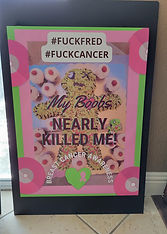

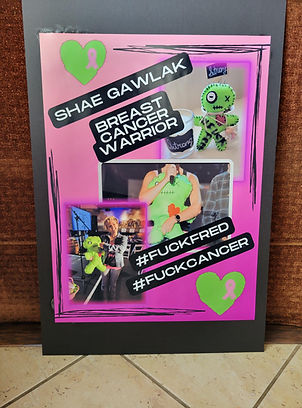
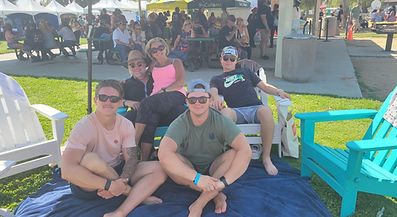


"If any part of my story resonated with you, helped you feel seen, or offered even a small sense of hope, please reach out. Cancer can be frightening, isolating, and overwhelming, but no one should ever have to navigate it alone. You deserve compassion, understanding, support, and a community that will walk beside you through every part of the journey, and always remember to advocate for yourself! Only you know your body the best!"
Love & Gratitude,
Shae & F*CK FRED